
Brand Armor AI Review: An AI Visibility and GEO Platform for Marketing Teams
Buyers increasingly ask ChatGPT, Claude, Gemini, Perplexity, and Grok for shortlists instead of browsing search results. If your brand is absent from those answers, you lose consideration before a sales conversation starts. Brand Armor AI is built for that specific problem: it watches how AI systems describe and recommend brands, then turns the findings into content and publishing actions.
This review explains what the platform does, who gets the most value from it, where it falls short, and how to decide whether it belongs in your stack.
What Brand Armor AI actually does
Brand Armor AI - AI Visibility & GEO Platform for Marketing Teams.
Brand Armor AI is an AI visibility and generative engine optimization (GEO) platform. Rather than tracking keyword rankings on a search engine results page, it monitors prompts — the questions real buyers type into AI assistants — and records whether your brand appears, how it is described, and which competitors are recommended instead.
The core capabilities, based on the vendor's product documentation, include:
- Prompt-level visibility monitoring across ChatGPT, Claude, Gemini, Perplexity, Grok, and other AI systems.
- Recommendation share measurement, so you can see what percentage of relevant prompts include your brand versus rivals.
- Competitive and citation intelligence, including which sources the AI systems draw on when forming answers.
- Content gap detection that feeds into briefs, article generation, and publishing workflows.
- Live AI crawler monitoring, showing when AI bots visit your site and what they retrieve.
- Sentiment and reputation tracking, plus source audits and hallucination control for inaccurate claims.
- An MCP server that connects brand intelligence data to AI assistants, and integrations with Slack, Teams, Salesforce, and HubSpot.
That combination matters because visibility problems and content problems are usually the same problem. A brand missing from AI answers is often missing from the third-party sources those models cite.
Who should consider it

Brand Armor AI Review: AI Visibility & GEO Platform - Who should consider it.
Brand Armor AI fits teams that already treat AI answers as a acquisition channel rather than a novelty. In practice, that means:
Mid-market and enterprise marketing teams with enough content volume that manual prompt checking has become unrealistic. If you are testing five prompts a month in a spreadsheet, you do not need this yet.
B2B and SaaS companies in category-driven markets. When buyers ask for "the best [category] tool," the answer set is small. Tracking recommendation share in that narrow window is directly tied to pipeline.
Agencies managing multiple brands. Prompt monitoring, competitor benchmarking, and content gap reporting map cleanly onto client retainers, though you should confirm multi-brand workspace terms during trial.
Teams already investing in content operations. The platform's value compounds when findings flow into an existing editorial or publishing process. Without that, you get dashboards but no movement.
Where it is strong
Brand Armor AI Review: AI Visibility & GEO Platform - Where it is strong.
Prompt monitoring is the right unit of measurement
Rank tracking was always a proxy. Prompt monitoring is closer to the actual buying question. Seeing which prompts trigger your brand, which trigger competitors, and how the wording changes the answer set is more actionable than a position number.
Citation and source auditing closes the loop
Knowing you are absent is only half the diagnosis. Source audits show which pages the models rely on, which is what tells you where to publish or pitch. This is the step most lightweight AI visibility tools skip.
Hallucination control addresses a real risk
AI systems confidently invent pricing, features, and partnerships. A workflow for detecting and correcting inaccurate claims about your brand is genuinely useful, especially in regulated or high-consideration categories.
The MCP server is a practical differentiator
Exposing brand intelligence data to AI assistants means your team can query visibility data conversationally instead of exporting reports. It is a small feature on paper and a meaningful time saver in weekly reporting.
Integrations reduce adoption friction
Slack, Teams, Salesforce, and HubSpot connections matter because visibility insights only change outcomes when they reach the people who act on them — content teams, sales, and leadership.
Limitations and things to verify
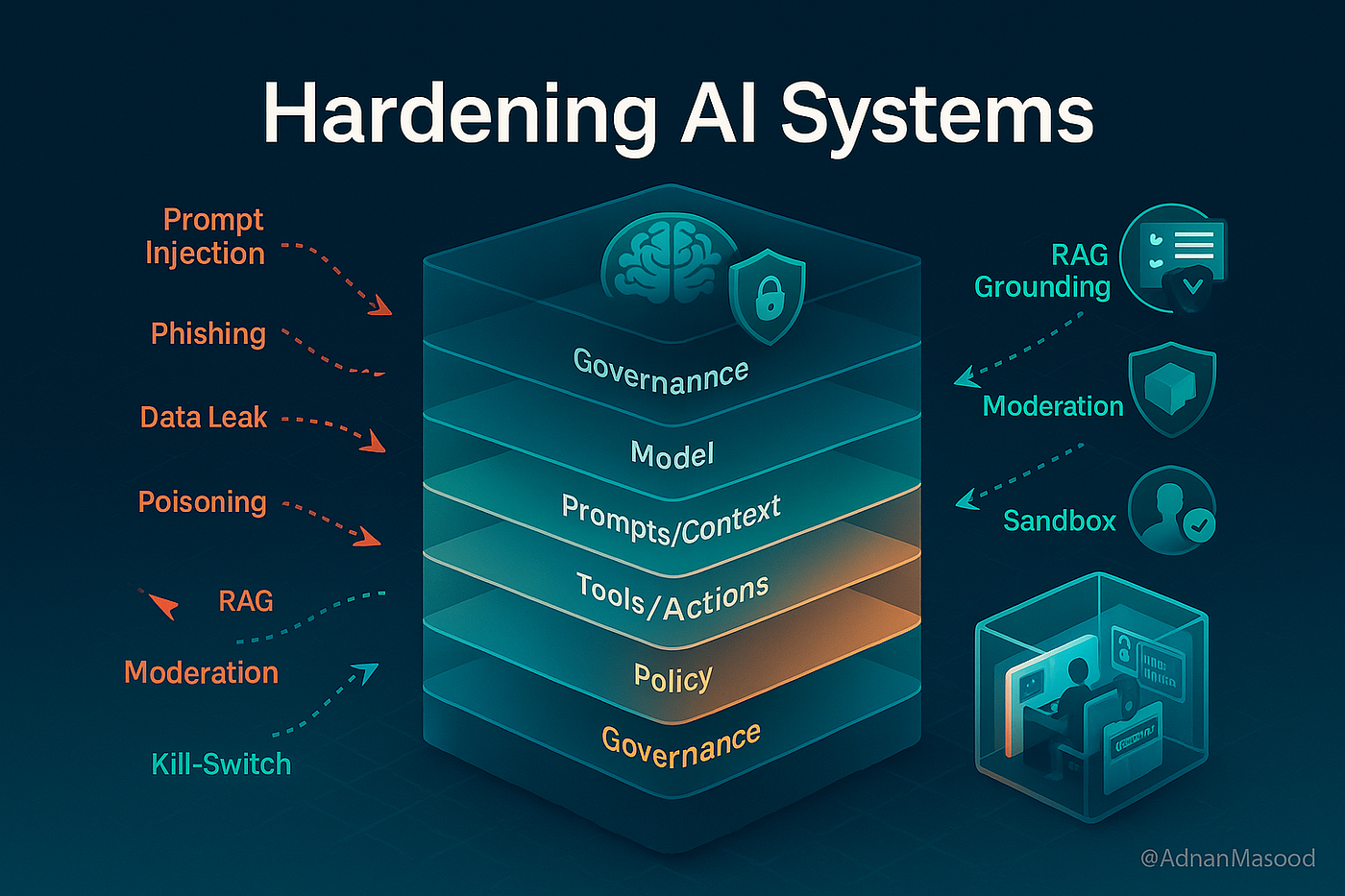
Brand Armor AI Review: AI Visibility & GEO Platform - Limitations and things to verify.
AI answers are non-deterministic. The same prompt can produce different responses across sessions, models, and regions. Any visibility metric is a sampled estimate, not a fixed score. Treat trends as directional.
Model coverage changes constantly. New assistants appear and existing ones update. Confirm which platforms are actively monitored and how quickly new ones are added.
Content generation is a starting point, not a finished product. Generated drafts still need editorial judgment, brand voice work, and fact-checking. Teams expecting publish-ready output will be disappointed.
Pricing is not fully transparent in public materials. The vendor sells subscription plans with a 3-day trial on paid plans and no credit card required upfront. Because plan tiers, prompt limits, and seat counts are not published in detail, you will need a trial or sales conversation to model cost against your prompt volume.
Attribution to revenue is indirect. You can measure visibility lift and recommendation share, but connecting that to closed revenue requires pairing the platform with your own CRM reporting.
The 3-day trial is short. It is enough to validate the interface and data quality, not enough to measure visibility improvement. Plan your evaluation criteria before you start.
Setup and time to value
Onboarding follows a predictable path: connect your brand and domains, define the prompt set that reflects real buyer questions, select competitors, and let the platform collect baseline data. Expect the first useful readout within days, since AI responses can be sampled quickly.
The longer timeline is on the content side. Turning gap findings into published assets, getting those assets indexed and cited, and then seeing AI answers shift typically takes weeks to months. Budget for that lag when you set expectations internally.
A practical first-month sequence:
- Build a prompt list from sales call transcripts and support tickets, not from keyword tools.
- Record baseline recommendation share and sentiment for your brand and three to five competitors.
- Run a source audit to identify which domains shape answers in your category.
- Prioritize two or three content gaps with clear commercial intent.
- Publish, then re-measure the same prompts on a fixed schedule.
Pricing signals and how to evaluate cost
Public materials describe subscription plans with a 3-day trial on paid plans and no credit card required upfront, but do not publish tier pricing. That means your cost model depends on variables you should confirm directly: number of tracked prompts, number of brands or workspaces, number of seats, model coverage, and whether content generation has usage caps.
A reasonable evaluation approach is to estimate your prompt volume first, then compare quoted pricing against the manual cost of the same work. If a marketer spends several hours a week checking AI answers and compiling competitor mentions, that labor is the baseline the subscription replaces.
How it compares to alternatives
AI visibility tooling generally falls into three buckets:
- Traditional rank trackers adding AI features. Familiar interfaces, but often limited prompt depth and weak citation analysis.
- Point solutions for prompt monitoring. Strong on visibility data, thin on content workflow and reputation management.
- Full GEO platforms like Brand Armor AI. Broader coverage from monitoring through content action, at the cost of a steeper setup and higher commitment.
If your only question is "do we appear in ChatGPT answers," a lighter tool may suffice. If you need to explain why you do not appear and fix it, the broader workflow earns its place.
Decision criteria
Choose Brand Armor AI if you can answer yes to most of these:
- AI assistants are a meaningful discovery channel for your category.
- You have content and SEO ownership with capacity to act on gap findings.
- You need competitor benchmarking and citation data, not just presence checks.
- You can absorb a subscription without published tier pricing.
- You want visibility data flowing into Slack, Teams, or your CRM.
Look elsewhere if you need deterministic metrics, publish-ready content with no editorial layer, or a self-serve free tier for long-term testing.
Sources and further reading
- Evren Karaarslan - Co-Founder of Brand Armor AI - LinkedIn - When someone asks ChatGPT, Gemini or Claude for the “best” solution in a category, only a few brands are mentioned. That recommendation layer is becoming the ...
- plot armor clothing brand recently launched by youtuber elvis the ... - Jul 28, 2026 ... Ill say its AI purely based on the fact that all of the shirt designs feel like they were made by artists that have wildly different skill sets ...
FAQ
Does Brand Armor AI track ChatGPT, Claude, Gemini, Perplexity, and Grok? Yes. The vendor lists monitoring across those systems and other AI platforms, with prompt-level visibility and recommendation tracking.
Is there a free trial? The vendor offers a 3-day trial on paid plans with no credit card required upfront. There is no indication of a permanent free tier.
How is this different from traditional SEO rank tracking? Rank tracking measures position on a results page. Brand Armor AI measures whether and how AI systems mention your brand in generated answers, including which sources influenced those answers.
Can it fix inaccurate AI claims about my brand? It provides hallucination control and source auditing to detect and address inaccuracies, but correction depends on the underlying sources models rely on, so results are not immediate or guaranteed.
What is the MCP server for? It connects brand intelligence data to AI assistants, letting teams query visibility and competitor data through AI tools rather than static reports.
Does it work alongside a lead generation product? The vendor also offers Prospectrum for outbound prospecting. The two products are independent, with separate onboarding, workspaces, and pricing — you are not required to use both.
Conclusion
Brand Armor AI targets a real and growing gap: brands are being summarized and recommended by AI systems that most marketing teams cannot see into. Its strength is the full loop from prompt monitoring to citation analysis to content action, with reputation and hallucination controls that most competitors treat as afterthoughts.
Its weaknesses are the ones common to a young category — non-deterministic data, opaque pricing tiers, and a short trial window. The practical move is to define your prompt set and success metrics before starting the trial, then judge the platform on data quality and whether its findings actually reach your content workflow. If AI answers influence your buyers, that evaluation is worth the three days.
For the vendor's own product breakdown, see the Brand Armor AI product page.